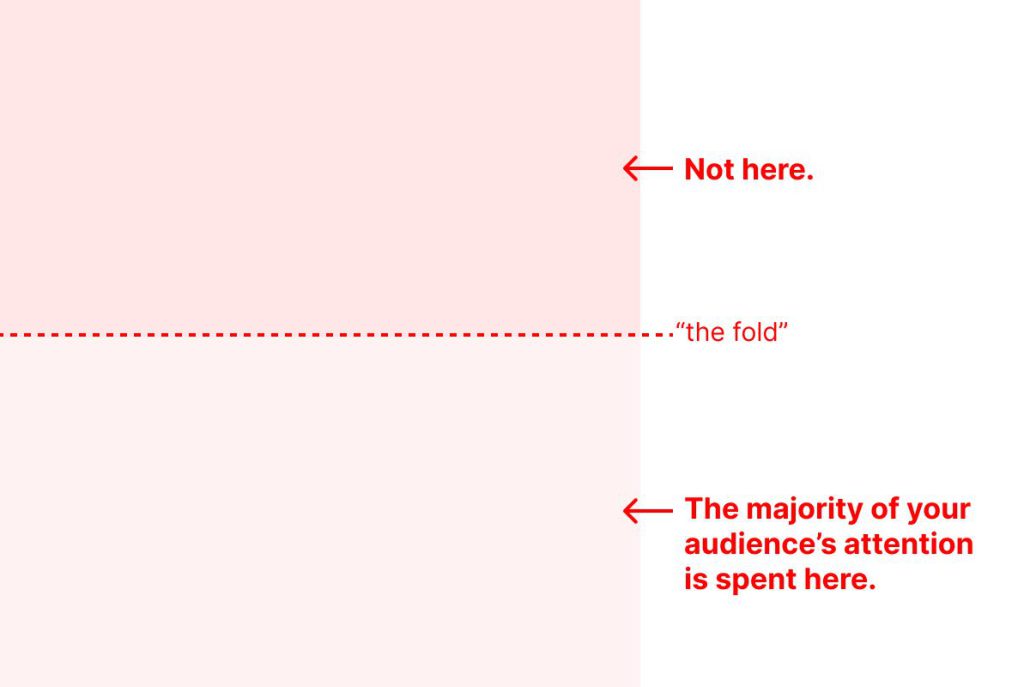
The Fold Exists, But It Doesn’t Matter, a good reminder that 66% of attention happens below the fold, people do know how to scroll, and good interaction design is all about managing attention. Length is not the problem — lack of rhythm is.
“Scrolling is an inattentive act. Scanning is partial attention. Reading is focused attention. A screen without intentional rhythm will lose attention as it is being scanned. One with controlled rhythm will not only retain attention, it will deepen it.” ~ Christopher Butler.
So, a few simple tips:
- First, remember that scanning is a reaction; reading is a choice. The majority of people who look at your screens will never read their contents.
- Anchor your most important information in a consistent place. For example, since most text is left-aligned, consider maintaining a left-alignment of text (with imagery floating right) so that a user can more quickly process that information by maintaining their scan on a single axis.
- Repetition is information. Repetition of smaller structures and arrangements helps a scanner understand the larger structure of your screen’s contents. Being able to immediately identify a list, for example, helps a scanner understand how some content supports other content as well as recognize potential choices and actions available to them.
- Empty space is not neutral. Intentional use of space enables scanners to quickly identify clusters of related information, as well as gives a scanner the ability to process the information they see. The less empty space a screen has, the greater its information density. The greater a screen’s information density, the less porous it is to attention and understanding.
Each of these tips has two important things in common.
The first is that they all relate to structure. These ideas will help the choices you make for where to put information lead to a greater ease in engaging with it. The second thing they have in common is that, when they work together, they create the rhythm of your screen.
Length is not the problem; lack of rhythm is.
Your screen can be as “long” as it needs to be. Length is not the problem; lack of rhythm is. When you establish a structure, you can imbue that structure with rhythm. The rhythm of a structure is defined by the repetition of arrangements and the spaces between them.
A screen without intentional rhythm will lose attention as it is being scanned. One with controlled rhythm will not only retain attention, it will deepen it.